
General Dentistry
Restorative Dentistry
Cosmetic Dentistry
BOTOX
Emergency Dental Care
sleep apnea and snoring
dental technology
About Periodontal Disease
oral health and wellness
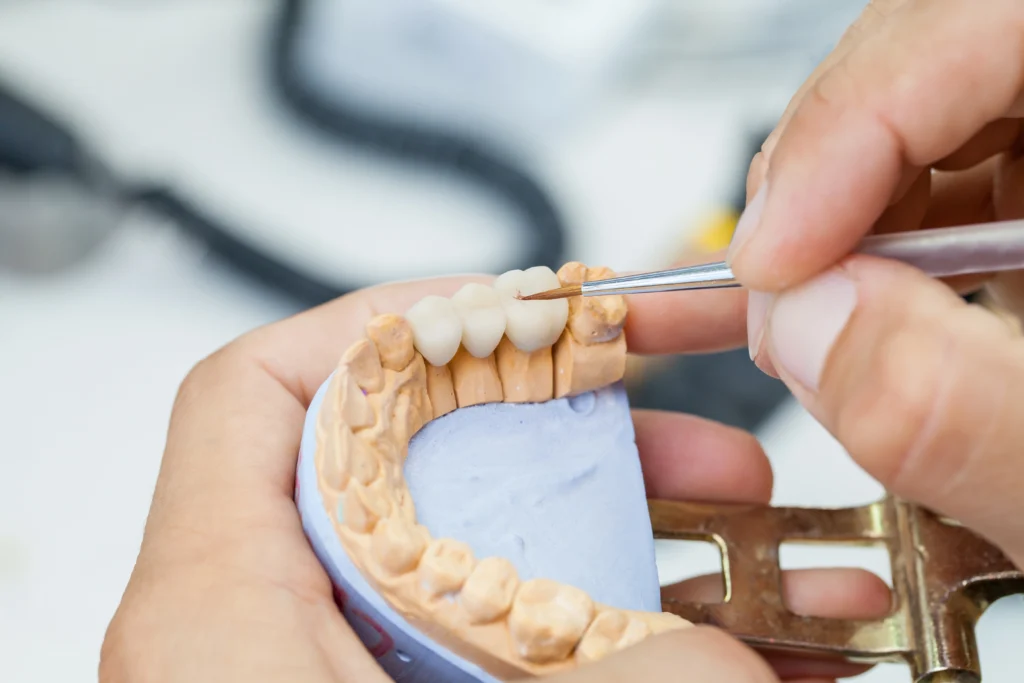
Missing teeth are more common than many people realize. The ADA notes that the average adult has up to three missing or decayed teeth. Dental bridges are among the most established solutions for replacing one or more missing teeth. A bridge uses two main components: abutment teeth or implants on either side of the gap, which are fitted with crowns, and a pontic — an artificial tooth that fills the missing space and connects to those crowns. For a single missing tooth, the adjacent teeth are prepared for crowns and the pontic bridges the space between them. When several consecutive teeth are missing, implants may be used as the abutment supports instead.
There are four main types of dental bridges.
Traditional Dental Bridge
The most widely used type, a traditional bridge crowns the natural teeth on each side of the gap and suspends one or more pontics between them, held firmly in place by those crowned abutments.
Cantilever Bridge
Similar in design to a traditional bridge, but anchored on only one side rather than both. This single-sided support can create a lever effect and may put added stress on the supporting tooth over time.
Implant Supported Bridge
Rather than relying on existing teeth, dental implants serve as the anchor for one or both ends of the bridge. This option is widely used and provides exceptional stability, particularly when multiple adjacent teeth are missing.
Maryland Bridge
Held in place by a metal framework bonded to the backs of neighboring teeth rather than full crowns. While gentler on the adjacent tooth structure, it may not hold as well under heavy chewing forces. Contact our office to find out which bridge option fits your needs and helps you get back to smiling.
FAQ
Frequently Asked Questions
Have questions but prefer not to call? Browse our FAQs for quick answers and a better understanding of our dental office and services.
A bridge is placed as an anchor for artificial teeth to adjacent crowns. A dental crown is a cap placed over a damaged or weakened tooth to restore its shape and strength. Both are forms of restorative dentistry.
Both procedures serve several advantages, such as bite restoration, protection for compromised teeth, and support for jaw alignment and chewing function. They’re durable and can last over a decade with proper care.
Crowns require reshaping the natural teeth, and bridges could alter the health of adjacent teeth in exchange for its support. Bridges don’t prevent bone loss under the missing tooth like implants can, and if a supporting tooth fails, the entire bridge may need replacing.
Maintaining your oral hygiene, avoiding chewing hard objects, and regular check-ups with your dentist can ensure your restorations last for years.